Received: 20 Aug 2018
Accepted: 23 Aug 2018
Published online: 23 Aug 2018
Environment, Energy, Sustainability: Journal- ES Energy & Environment
Qinglong Jiang,1 Wei Yu,2 Aboozar Mosleh,1 Chuntai Liu,2 Daoyuan Wang,1 Xin Tu,3 Yanan Liu,4 Stéphanie Ognier,6 Grant Wangila,1 Bingyang Cao,7 Zhanhu Guo5 and Brian J. Ewards5
1Department of Chemistry and Physics, University of Arkansas, at Pine Bluff, Arkansas 71601,USA
2School of Environmental and materials engineering, Shanghai Second Polytechnic University, Shanghai, China
3Departments of Electrical Engineering & Electronics, University of Liverpool, Liverpool, L69 3BX, United Kingdom
4 School of Environmental Science and Engineering, Dong Hua University, Shanghai, China
5Department of Chemical and Biomolecular Engineering, University of Tennessee, Knoxville, TN, 37996 USA
6 Key Laboratory for Thermal Science and Power Engineering of Ministry of
Education, Department of Engineering Mechanics, Tsinghua University, Beijing
100084, China
7 School of Materials Science and Engineering, The Key Laboratory of Material
Processing and Mold of Ministry of Education, Zhengzhou University, Zhengzhou,
China
* Corresponding Author(E-mail) : jiangq@uapb.edu
Abstract
As human beings, we are an inseparable part of our global environment. Natural resources from the environment, including natural energy resources, play a key role in the development of human civilization; however, the global environment has not been managed well during the course of civilization. Therefore, one of the most important challenges for the world nowadays is to find applications that utilize sustainable and renewable sources of energy, such as solar cells, wind turbines, fuel cells, et al.
Keywords: Energy; Environment; Sustainability; Pollution; Solar cell.
1. Introduction
We, as human beings, are born into natural world and will continue to be part of the environment for the rest of the history. Tens of thousands of years ago, our ancestors learned how to start a fire with a flint stone. It was at that moment when human beings first started to harness the energy from environment. For the past thousands of years, all sorts of energy sources, such as coal, oil, wind, nuclear, hydroelectric energy, petroleum, and others, have been utilized over the long history of human development, sometimes at great expense to the environment. In the past several decades, however, this process of ecological and environmental degradation has been taken to alarming levels; so much so that the climate of our entire planet is being adversely affected to a greater extent with each passing year. Energy has been one of the most important challenges for the world, scientifically and technologically. From the energy batteries in the smart phone to the fuel for the rocket, it has become more and more important in our daily life. However, most of the world’s current energy supply, such as oil, coal, and natural gas, is from nonrenewable sources and causes serve environmental issues, including global climate change and pollution. Fig. 1 is only the tip of the iceberg that our species has contributed to the degradation of the environment: traditional energy mining destroys the habitat of creatures and causes pollution (Fig. 1a); ocean becomes ocean of trash (Fig. 1b). The victims are not only the environment and animals but also ourselves (Fig. 1c and 1d).

Fig. 1. a: Traditional energy mining is at the sacrifice of the environment; b: Seas polluted with tons of wastes; c: directly impacting animals by plastic waste; d: air pollution-humans turned our own monsters against ourselves.
Explosive growth of the global population and the associated exponential demand for energy are exhausting our fossil fuel supplies at an alarming rate, which may reach a Malthusian trap any time (resources vs. population, inset in Fig. 23). Currently, about 13 terawatts (TW) of energy is needed to sustain our way of life around the planet. In the year 2050, an additional 10 TW of energy is projected to be required to maintain our future consumption.1 Therefore, without a doubt, the supply of clean sustainable energy is considered as one of the most important scientific and technical challenges facing humanity in the current century.2
 Fig. 2. World primary energy consumption (million tons of oil equivalent 1950-2050).
2. Sustainability and renewability: solar cells
One hour of energy from the sun can support the whole world’s energy consumption for a single month. In 1954, the first silicon solar cell was invented at Bell Laboratories. Since then, photovoltaic (PV) power is considered to be a sustainable and clean energy which can help to meet the projected energy requirement in the upcoming decades. Currently, most of the commercialized solar cells are based on inorganic silicon semiconductors with high power conversion efficiencies (PCEs) of 26% in lab and about 20% for module,4 and the cost per Watt is still more expensive than traditional energy. The new generations of solar cells with cheaper cost or higher efficiency solar cells are expected to help replace non-renewable sources of energy. Varieties of solar cells were developed as shown in Fig. 3.
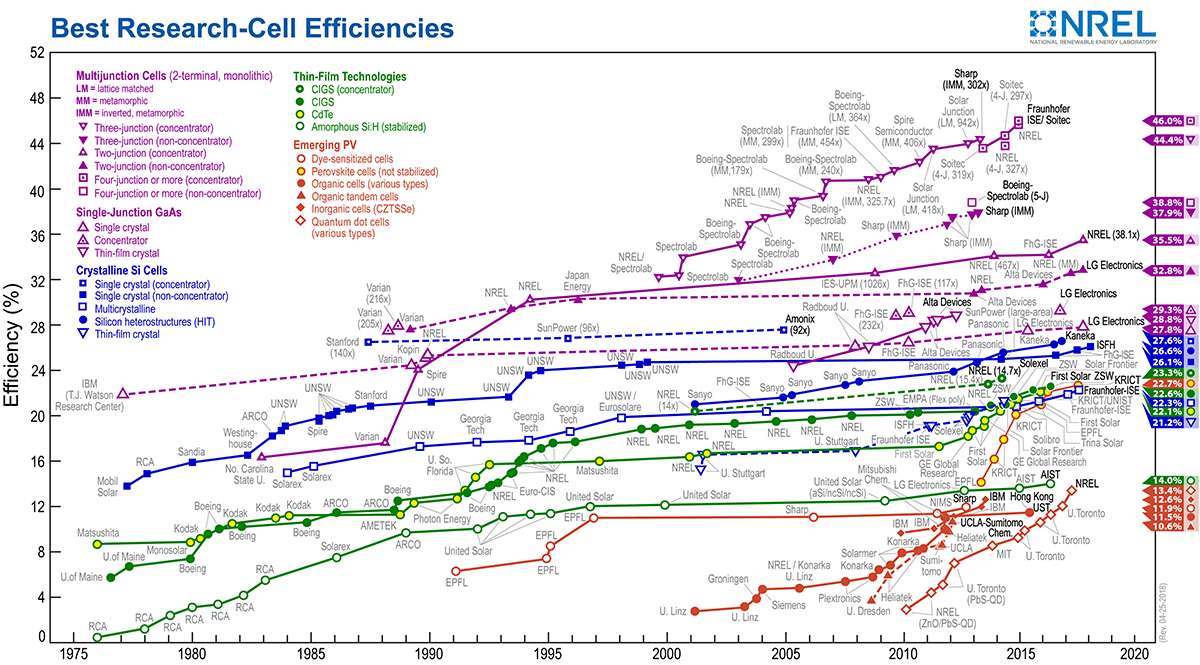
Fig. 3 Classification and development of solar cells.5
As in III-V cells, a single crystal GaAs solar cell achieved the highest PCE to date, over 28%, in a single junction solar cell.4 Due to the high cost, however, GaAs solar cells are used in only limited applications, such as satellites in outer space. As one type of thin-film solar cell, CIGS (CuInGaSn) solar cells have attained 21% of PCE over the past 30 years and have been commercialized at small scale.4 Comparing with the CIGS solar cell and GaAs solar cell, halide perovskite solar cells, which were developed from other thin-film solar cell dye sensitized solar cells (DSSCs),6,7 have achieved 23.2% PCE (2018) in less than 10 years with lower costs.8 In DSSC, as shown in Fig. 4a and 4b, dyes (FN719) are anchored on TiO2 (inset in Fig. 4a) to absorb the light and I-/I3- in electrolytes is used as redox couple.7,9 Instead of organic dyes, halide perovskites (mixture of PbX2 and MX, X=I-, Br-, SCN-;10,11 M= CH3NH3+, Cs+, FA+)12 can absorb light up to 800 nm with long carrier diffusion.13 TiO2, in the form of nano-particles or nano-wires, is usually used as an electron transport material.14,15 A cross section SEM image of a halide perovskite solar cell is shown in Fig. 4c and the energy diagram is shown in Fig. 4d.16 FTO glass and metal, such as gold, silver and nickel,17-19 are used as the electrodes. On top of the halide perovskite coated on TiO2, a hole transport material (HTM) is coated. Among all the organic and inorganic HTMs, such as CuSCN and CuI,20,21 spiro-OMeTAD is the mostly used with the highest PCE.8 In less than 10 years, the exponential growth of PCEs has been due to the engineered science and technology of material and chemistry.22-24

Fig. 4 a and b: demonstration of dye sensitized solar cell; c: cross sectoin SEM image of perovskite solar cell; d: eneryg diagram of perovskite solar cell. ® Copyright 2014, ACS
The developmental story of halide perovskite materials is not over yet. As progress in solar cells is still ongoing, scientists find more and more unique properties of halide perovskite materials25 and expand the application of into lots of other fields, such as light emitting and sensors.26-29
3. Energy, environment and economy balance (3E balance)
Fig. 5 demonstrates the concept of a 3E balance. Economy growth requires more and more green energy industry; sufficient, stable and affordable energy boosts the economic growth. Economy growth cannot be at the sacrifice of environment, however, which needs environmentally friendly production processes and activities; on the other hand, a polluted environment will undoubtedly slow economic growth. Environmentally friendly and efficiently utilization of energy will boost the economy, as will the development of a sustainable environment and renewable energy supply.

Fig. 5. The concept of 3E balance.
The inset photos of solar cell powered aircraft and automobiles are a great example of energy, environmental, and economic balance. Compared with vehicles based on non-renewable energy, solar cell powered aircraft and cars generate zero emission.
ES Energy & Environment is a peer-reviewed international journal for the publication of very high quality, groundbreaking research from across all areas of energy capture, conversion and storage, alternative fuel technologies and environmental science. Special emphasis is placed on studies of broad interest that lead to a deeper understanding of the functional mechanisms underlying chemical, physical, and/or biological processes.
References
1. P. Kamat, J. Phys. Chem. C 2007, 111, 2834-2860.CrossRef View Record in Scopus
2. N. Lewis and D. Nocera, P. Natl. Acad. Sci. USA, 2006, 103, 15729-15735.CrossRef View Record in Scopus
3. http://peakoilbarrel.com/world-energy-2017-2050-annual-report/.
4. M. Green, K. Emery, Y. Hishikawa, W. Warta, E. Dunlop, D. Levi and A. Ho-Baillie, Prog. Photovoltaics: Res. and Appl., 2017, 25, 3-13.CrossRef View Record in Scopus
6. B. Oregan, Gratzel, M., Nature, 1991, 353, 737-740.CrossRef View Record in Scopus
7. Q. Jiang, Y. Yeh, N. Lu, H. Kuo, M. Lesslie and T. Xu, J. Renew. Sustain. Ener., 2016, 8, 013701.CrossRef View Record in Scopus
8. N. Jeon, H. Na, E. Jung, T. Yang, Y. Lee, G. Kim, H. Shin, S. Seok, J. Lee and J. Seo, Nat. Energy, 2018, 3, 682-689.CrossRef View Record in Scopus
9. J. Gong, J. Liang and K. Sumathy, Renew. Sust. Energ. Rev., 2012, 16, 5848-5860.CrossRef View Record in Scopus
10. A. Kojima, K. Teshima, Y. Shirai and T. Miyasaka, J. Am. Chem. Soc., 2009, 131, 6050-6051.CrossRef View Record in Scopus
11. Q. Jiang, D. Rebollar, J. Gong, E. L. Piacentino, C. Zheng and T. Xu, Angew. Chem. Int. Ed. Engl., 2015, 54, 7617.CrossRef View Record in Scopus
12. M. Saliba, T. Matsui, J. Y. Seo, K. Domanski, J. P. Correa-Baena, M. K. Nazeeruddin, S. M. Zakeeruddin, W. Tress, A. Abate, A. Hagfeldt and M. Gratzel, Energ. Environ. Sci., 2016, 9, 1989-1997.CrossRef View Record in Scopus
13. D. Shi, V. Adinolfi, R. Comin, M. Yuan, E. Alarousu, A. Buin, Y. Chen, S. Hoogland, A. Rothenberger, K. Katsiev, Y. Losovyj, X. Zhang, P. A. Dowben, O. F. Mohammed, E. H. Sargent and O. M. Bakr, Science, 2015, 347, 519-522.CrossRef View Record in Scopus
14. Q. Jiang, X. Sheng, Y. Li, X. Feng and T. Xu, Chem. Commun., 2014, 50, 14720-14723.CrossRef View Record in Scopus
15. J. You, Z. Hong, Y. M. Yang, Q. Chen, M. Cai, T. B. Song, C. C. Chen, S. Lu, Y. Liu, H. Zhou and Y. Yang, ACS Nano, 2014, 8, 1674-1680.CrossRef View Record in Scopus
16. J. T. Wang, J. M. Ball, E. M. Barea, A. Abate, J. A. Alexander-Webber, J. Huang, M. Saliba, I. Mora-Sero, J. Bisquert, H. J. Snaith and R. J. Nicholas, Nano Lett., 2014, 14, 724-730.CrossRef View Record in Scopus
17. S. Kazim, M. K. Nazeeruddin, M. Gratzel and S. Ahmad, Angew. Chem. Int. Ed. Engl., 2014, 53, 2812-2824.CrossRef View Record in Scopus
18. Q. Jiang, X. Sheng, B. Shi, X. Feng and T. Xu, J. Phys. Chem. C, 2014, 118, 25878-25883.CrossRef View Record in Scopus
19. M. Liu, M. B. Johnston and H. J. Snaith, Nature, 2013, 501, 395-398. CrossRef View Record in Scopus
20. S. Ye, W. Sun, Y. Li, W. Yan, H. Peng, Z. Bian, Z. Liu and C. Huang, Nano Lett., 2015, 15, 3723-3728. CrossRef View Record in Scopus
21. J. A. Christians, R. C. Fung and P. V. Kamat, J. Am. Chem. Soc., 2014, 136, 758-764.CrossRef View Record in Scopus
22. H. P. Zhou, Q. Chen, G. Li, S. Luo, T. B. Song, H. S. Duan, Z. R. Hong, J. B. You, Y. S. Liu and Y. Yang, Science, 2014, 345, 542-546. CrossRef View Record in Scopus
23. Q. Jiang, L. Wang, C. Yan, C. Liu, Z. Guo and N. Wang, Eng. Sci., 2018, 1, 64-68. CrossRef View Record in Scopus
25. Q. Jiang, X. Zeng, N. Wang, Z. Xiao, Z. Guo and J. Lu, ACS Energy Letters, 2018, 3, 264-269.CrossRef View Record in Scopus
28. M.-A. Stoeckel, M. Gobbi, S. Bonacchi, F. Liscio, L. Ferlauto, E. Orgiu and P. Samorì, Adv. Mater., 2017, 29, 1702469.
29. Y. Zhuang, W. Yuan, L. Qian, S. Chen and G. Shi, Phys. Chem. Chem. Phys., 2017, 19, 12876-12881.